

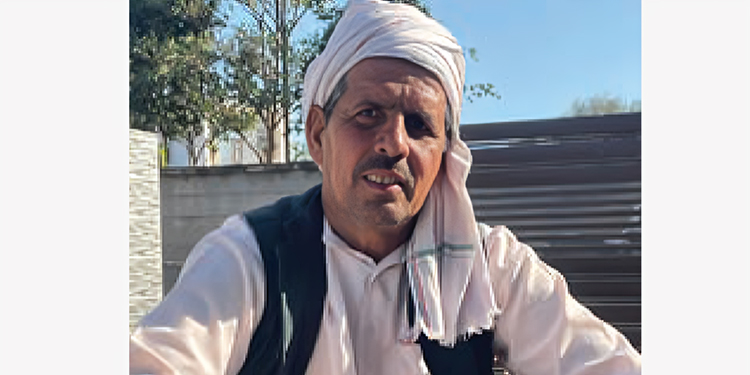
Mahavir, a 55-year-old farmer from Pillu Khera village in Jind district, has been farming since 1998. With five acres of land, he has been growing paddy, sugarcane, wheat, and bajra, following traditional farming practices. Like many other farmers in his region, Mahavir faced a significant challenge when it came to managing crop residue. For years, he relied on burning stubble after harvest, unaware of the severe impact it had on air quality, soil health, and the well-being of his community. The practice was widespread, with nearly 80% of farmers in his area engaging in stubble burning due to a lack of alternatives.
Mahavir first learned about the Crop Residue Management (CRM) Project through his cooperative society. The initiative, led by Fidelity International and the CII Foundation, introduced farmers to sustainable residue management techniques and provided access to aordable agricultural machinery. Intrigued by the potential benefits, he decided to adopt CRM practices in October 2024.
Unlike some farmers who experimented on a small portion of their land, Mahavir committed fully, implementing these practices across his entire five-acre farm.
Transitioning away from stubble burning was not without its challenges. One of the biggest hurdles Mahavir faced was the unavailability of necessary machinery at the right time. He had considered purchasing CRM equipment but found the cost and maintenance requirements prohibitive. However, through the project’s intervention, he was able to access machinery from his cooperative society at a significantly lower cost than private vendors. This access made a crucial difference, allowing him to implement in-situ crop residue management effectively.
The shift to sustainable practices brought immediate benefits. His soil health improved, the quality of air in his village enhanced, and he saw a noticeable reduction in expenses. Previously, Mahavir spent around ₹2,500 per acre on stubble burning and manual labor. With the adoption of mechanized CRM techniques, his costs reduced to ₹1,800 per acre. Additionally, he gained valuable technical knowledge through training sessions organized by the CII Foundation and the Agriculture Department, equipping him with better farming strategies for the future.
Beyond the financial and environmental advantages, Mahavir found a renewed sense of purpose. The project not only provided practical solutions but also empowered him with awareness about sustainable farming. Today, he is an advocate for CRM practices, encouraging other farmers in his community to move away from burning.
His story is a testament to how awareness, resources, and the right support can bring about lasting change in agricultural practices. With initiatives like the CRM Project, farmers like Mahavir are leading the way toward a more sustainable future, benefiting not just themselves but their entire communities.