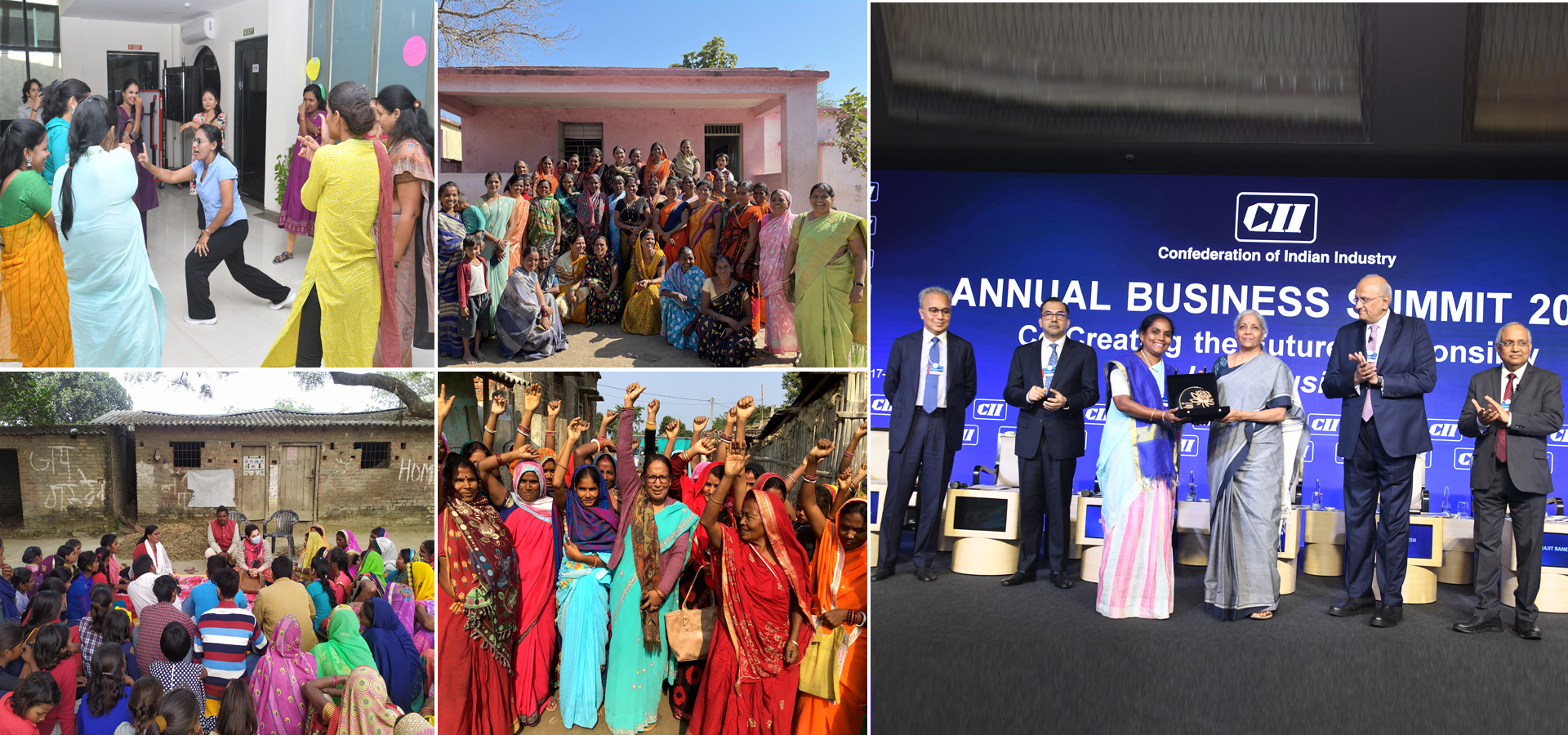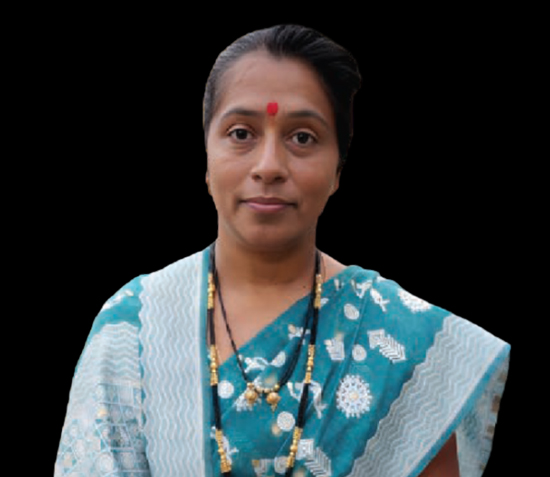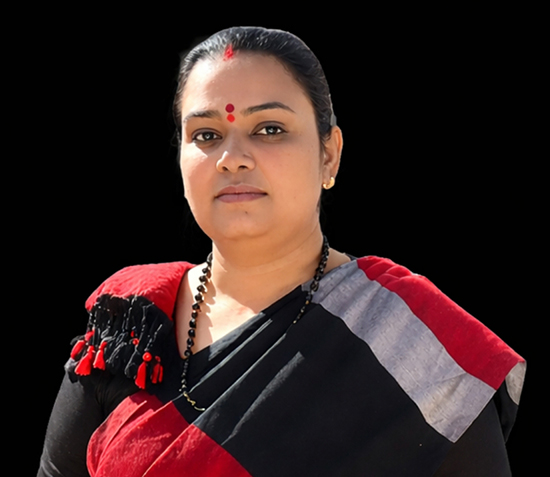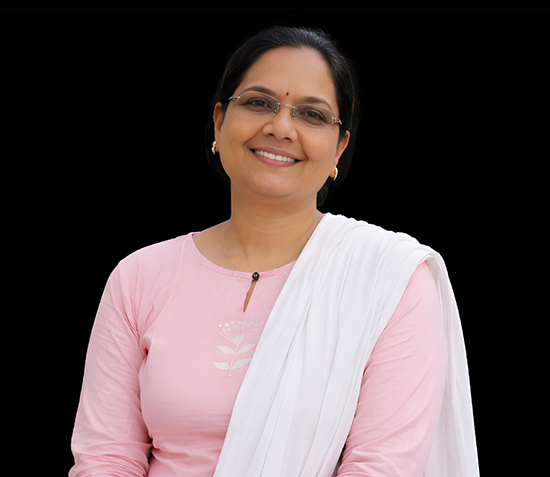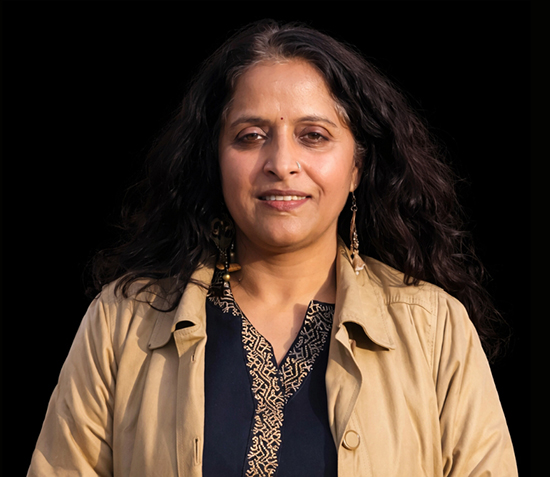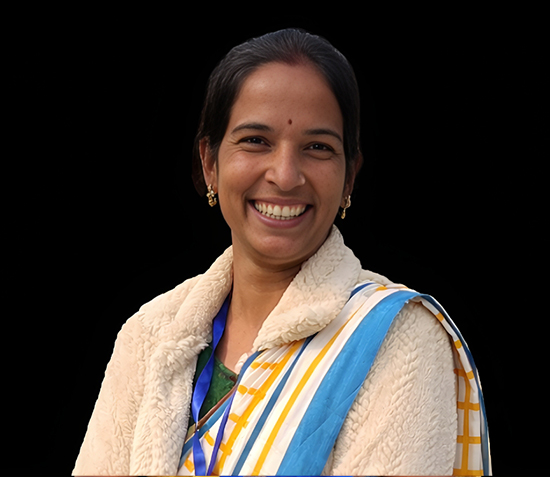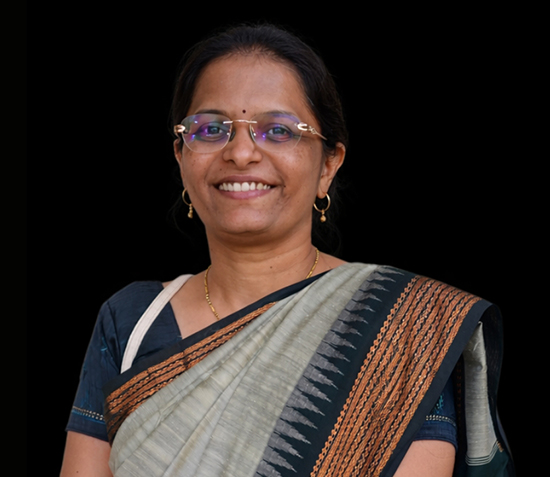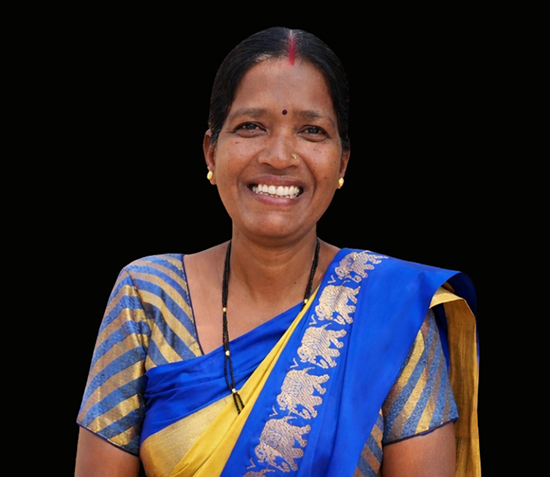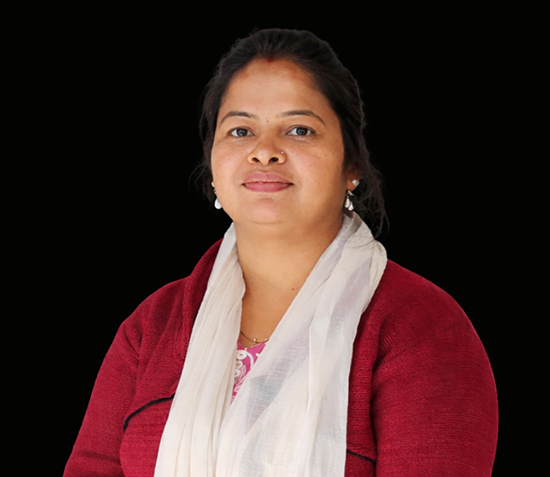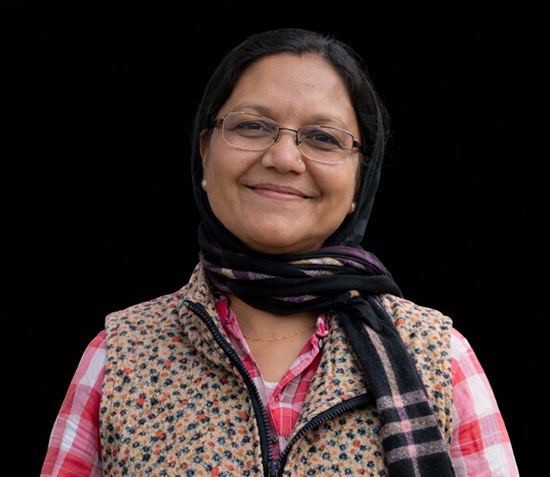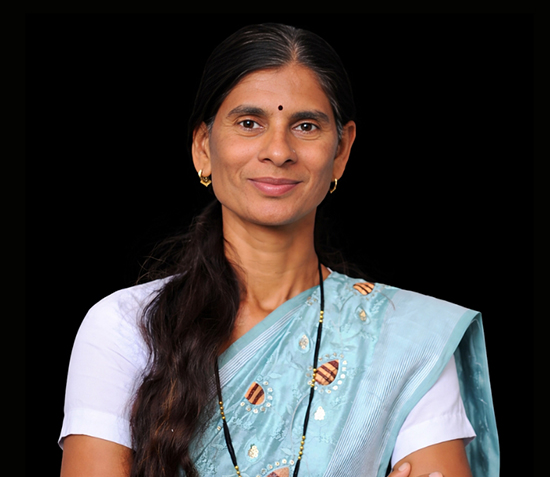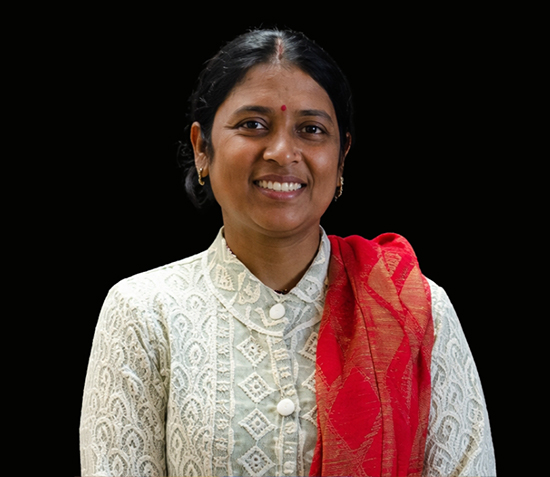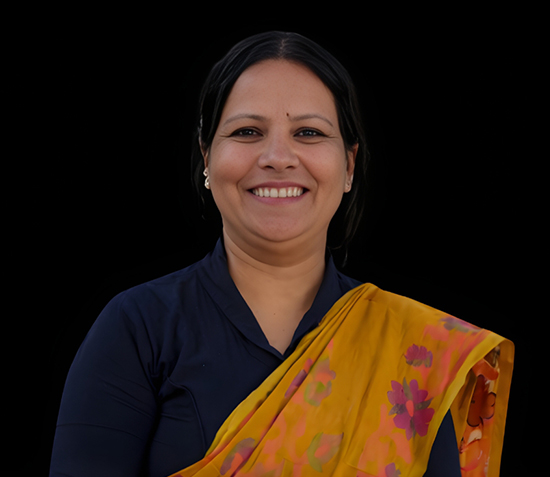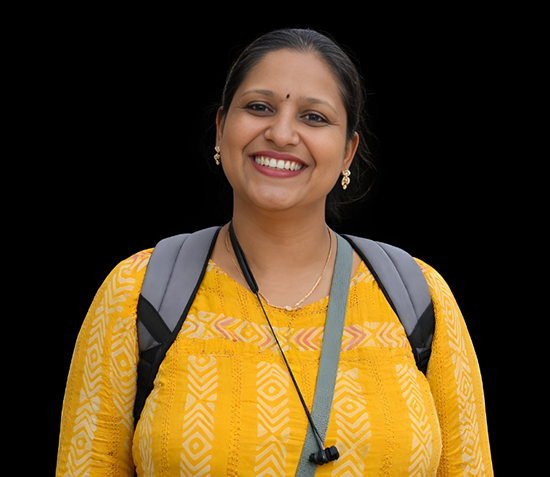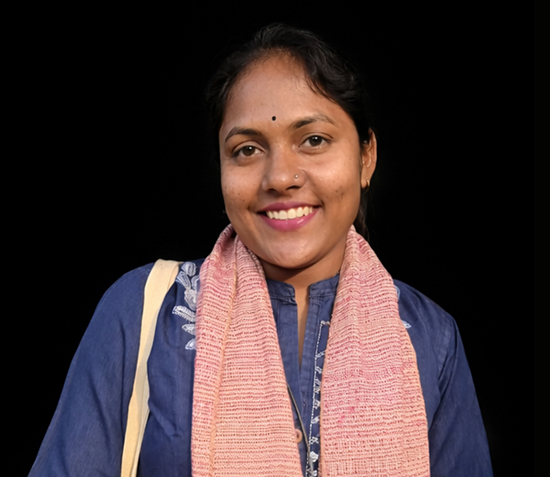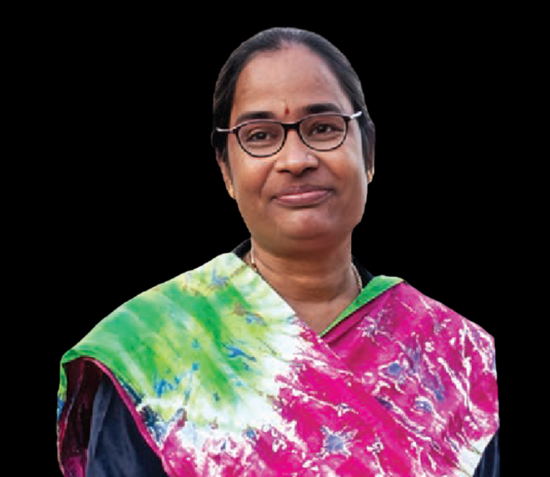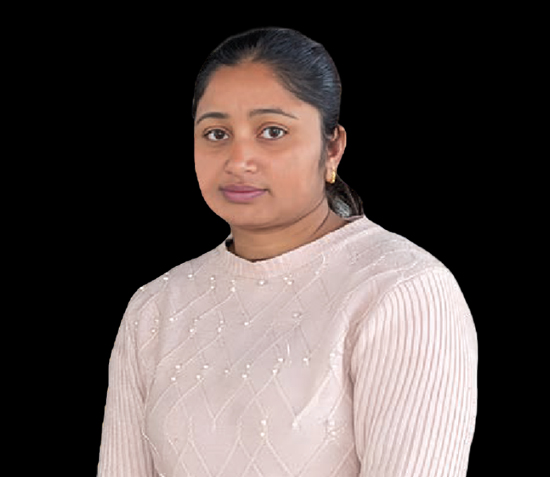
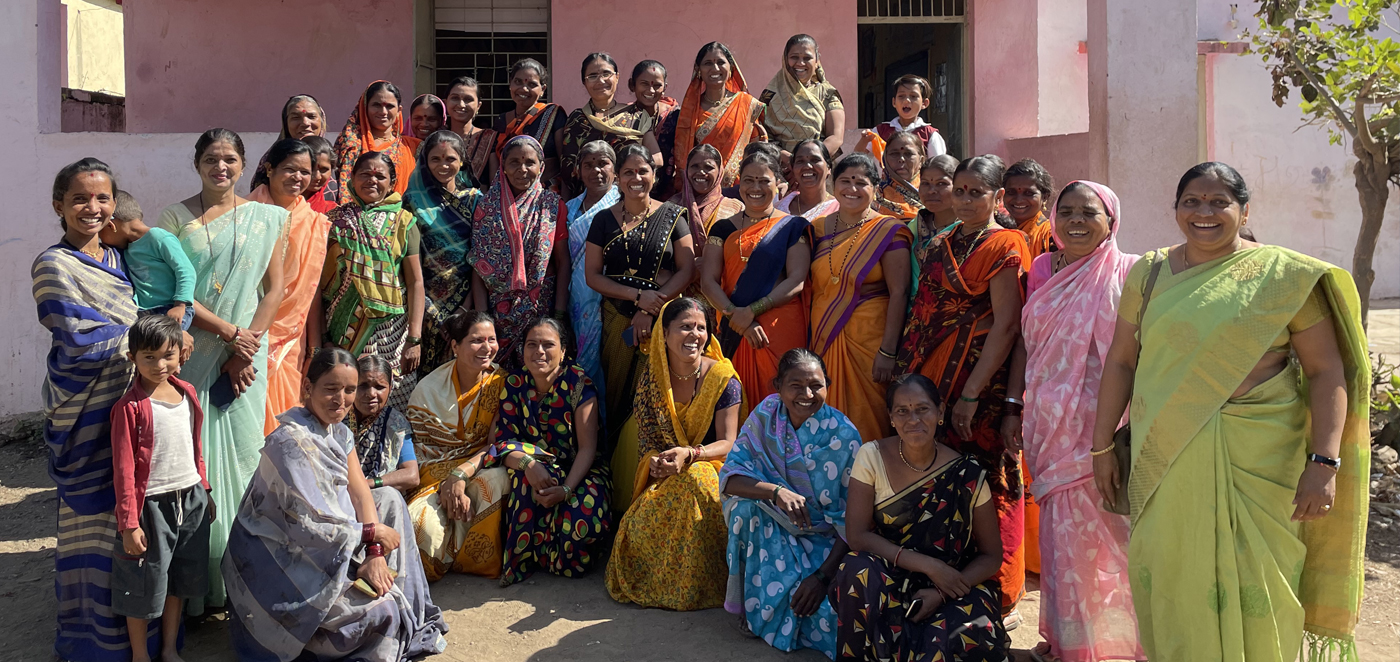


Empowering Champions of Change, Assam: Grassroots women leaders in Assam were identified and recognized for their efforts in driving social change. 15 women were recognized at a prestigious award ceremony in Bongaigaon. Selected women received stipends and engaged in community development projects. Development initiatives were implemented with guidance from the program, enabling the women to address local challenges and create meaningful impact in education, health, microenterprise, and community strengthening.
Capacity-building initiatives are conducted to support women through training sessions, mentorship, and skill-development workshops, equipping the Woman Exemplars with essential leadership, management, and problem-solving skills. Peer-learning and networking opportunities broaden their perspectives, helping them scale their initiatives and inspire others in their communities.
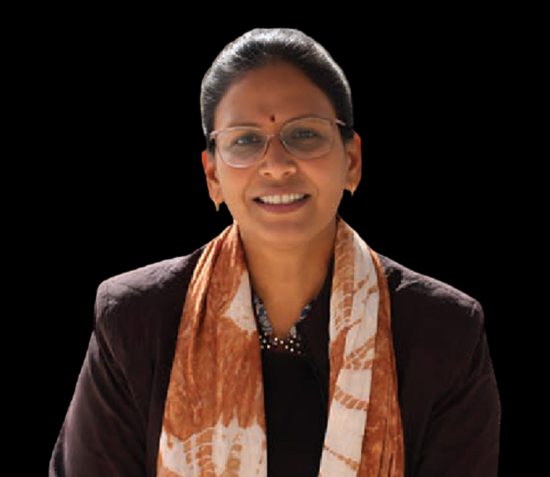
Kranti from Indore, Madhya Pradesh, grew up in a Scheduled Caste family witnessing systemic discrimination associated with caste and gender. Her turning point came with the belief that dignity and respect are core for any change to be successful, whether ending manual scavenging or addressing gender-based violence faced by women engaged in the task. Through her work, Kranti has mobilised communities in 32 villages to end manual scavenging among 230 families and supported 40,000 women facing violence and exclusion through trainings. She has enabled demolition of dry latrines, supported families to shift to alternative livelihoods, and provided legal aid to more than 3,400 women. Her work has also ensured access to social security and labour rights for over 1 lakh individuals, while engaging 6,000 young people in prevention and awareness efforts.
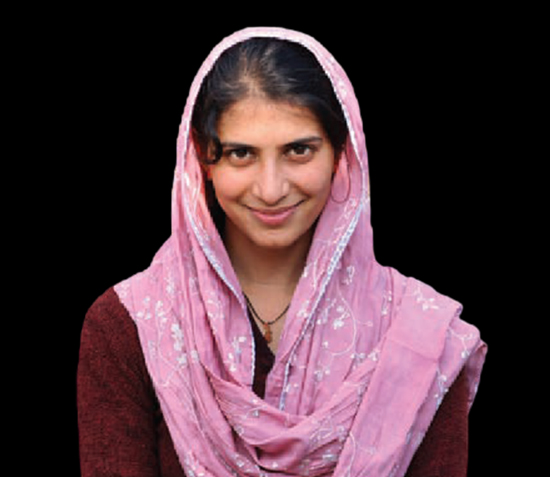
Jasmeen Hussain, from Nuh, Haryana, works on addressing deep-rooted gender norms, low female literacy and systemic barriers to girls education in orthodox religious communities. She is changing the education system by integrating mainstream education within the religious centres of learning. By working closely with religious leaders and educators, she introduces scientific thinking while building trust. She has worked across 16 villages and 8 religious centres to identify out-of-school children through household mapping and counselling, supporting the re-enrolment of over 4,000 children and facilitating enrolment for 2,000 new students. Her approach integrates remedial education and home-based learning support, reaching over 1,000 children, while also engaging with families and communities to shift attitudes around the education of girls.
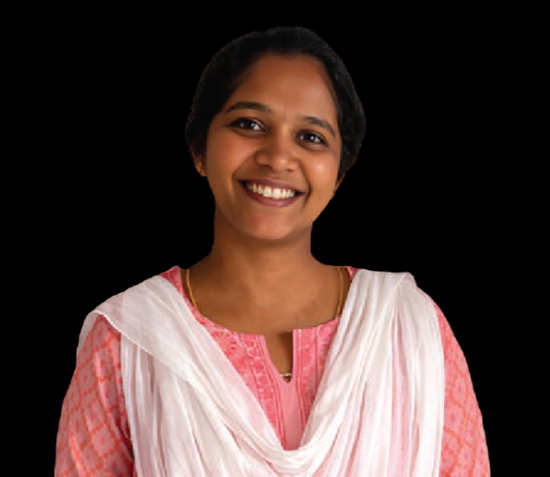
Shalini from Salem, Tamil Nadu, a person living with HIV, navigated mental health struggles, and systemic exclusion to shape the lives of people living with HIV. She transformed her personal experience into leadership by launching the HEAL initiative, an integrated HIV care model that embeds structured mental health support and life skills counselling within clinical treatment for persons living with HIV. Shalini has directly supported over 5,700 individuals and indirectly reached more than 7,000 people. She has conducted 1,051 counselling sessions and supported 1,054 HIV-positive individuals to improve treatment adherence. By institutionalising HEAL in government hospitals across Salem, Shalini is driving systems-level change. Her work reduces stigma, normalises mental health care in HIV treatment, and builds a survivor-centred public health ecosystem rooted in dignity and compassion.
Arundhati Patil, based in Kolhapur, Maharashtra, is an agri innovator who has developed a nursery based income model, training women to raise saplings using full germinators. Each nursery now generates an annual income of ₹5–6 lakh. She recognised that income is the first step to agency, she organised women into collectives and anchored them in sustainable agriculture. She has organised nearly 45,000 farmers across 52 villages into collectives to pursue organic farming improving access to inputs, markets, and government schemes. Her work in organic farming and vermicomposting has helped 1,500 women farmers increase profits while creating local livelihoods. Her work stands out for combining grassroots innovation with collective action enabling small farmers to reduce costs, improve incomes, and build resilient, sustainable farming systems.
Anita Vishwakarma from Kurla Mumbai, has spent over a decade strengthening access to justice, education, and livelihoods for marginalized women and girls. Growing up in a low-income family, she witnessed public harassment by a police officer, shaping her resolve to make public institutions more accessible and accountable. Anita has built community-led platforms that bridge gaps between communities and government systems, addressing domestic violence, school dropout, and lack of legal awareness. Reaching over 7,000+ community members directly, she has mobilized over 1,200 women through 110 Self-Help Groups, supported 5,000 at-risk girls to access education, and conducted safety and awareness sessions with 1,500+ children.
Bhavana Murlidhar Waghmare from Kalyan, Maharashtra, works to bridge critical gaps in documentation and entitlements, ensuring women are visible within systems that shape their rights and opportunities. Growing up with the dual burden of poverty and caste ostracization, her lived experiences shaped her approach. Through Shakya Samajik Sanstha, Bhavana has mobilised 9,000 women workers and has worked with them to secure identity documents, enabling over 3,500 women from nomadic and tribal communities to access entitlements. She has also organized 1,200 women into collectives and trained 150 women leaders. With her focus on collectivisation and systems engagement, Bhavana is ensuring that women access services, build leadership and agency to participate in decision making and claim their rights.
Bimla Vishwapremi from Kangra, Himachal Pradesh, has spent over three decades addressing caste-based discrimination. Shaped by exclusion and personal loss, she chose a path rooted in awareness, solidarity, and justice. Through her organisation Parvatiya Mahila Vikas Trust, Bimla has organized 3,200 women across 200 villages, provided legal counselling and mediation to over 2,500 women, facilitated action under the SC ST Act to create safe spaces for survivors of violence, and used community theatre and cultural mobilisation to enable dialogue on discrimination, gender-based violence, and reproductive health for 1,000 women. Bimla is helping women move from silence and isolation to confidence and leadership, realigning gender and power norms in rural India.
Kanchan Jha from Supaul, Bihar, enables women to engage with systems, access entitlements, and confidently participate in decision-making processes. Having experienced early marriage and disrupted education herself, she brings a deeply contextual understanding to her work. Over the last 15 years, Kanchan has mobilised women into collectives and strengthened linkages with public systems. She has supported over 2,500 women and girls in education, connected 1,500 women to health and violence redressal services, and led sanitation initiatives across 26 panchayats, reaching 26,000 people. She has also enabled women to access government schemes while building digital and financial awareness. Her work reflects a sustained effort to build self-reliant communities where women are informed, confident, and actively shaping decisions that affect their lives.
Deepali Chougule from Kolhapur district, Maharashtra, works to ensure uninterrupted education for children of migrant families, particularly sugarcane workers. Her work addresses learning disruptions caused by seasonal migration and builds systems that enable continuity in education. As the first girl in her village to complete a Master’s in Social Work, she brings both lived experience and professional commitment to this issue. Through her initiatives, Aas and Aarambh, Deepali has developed hyper local, context-responsive learning models for children at migration sites, supporting over 1,500 children directly while building linkages with formal systems such as Samagra Shiksha. By partnering with government schools, she reached 15,000 children, increasing enrolment by 20%. Deepali has created a model that is both adaptable and scalable across migration-affected regions.
Hemlata Rajput from Mahasamund district, Chhattisgarh, has dedicated over two decades to ensure that girls from vulnerable backgrounds are able to enter, continue, and benefit from education systems. Navigating early personal responsibilities and social barriers, she continued her education and built a long-term commitment to community-based learning. Through her organisation Shreejan, Hemlata has identified school dropouts, counselled families, and enabled re-enrolment. Since 2002, she has helped establish 52 community-supported coaching centres supporting 271 children, created safe residential arrangements for girls to continue their education, and advanced adult literacy for over 2,000 women. Through system strengthening at the district-level she has reintegrated 4,000 adolescents into formal education systems and secured 2,000 new admissions. Hemlata is building a robust ecosystem for learning through community-based education models.
Nirmala Sharma from Pali, Chhattisgarh, is a government school teacher who has focused on strengthening foundational learning through activity-based pedagogy, teacher capacity building, and deep community engagement. Her journey began in a remote primary school with minimal infrastructure and low student attendance. Through sustained efforts, she revitalized Chowkpara Primary School, increasing student attendance from just 15 to over 100 within a year, while improving school infrastructure through community support. As a Master Trainer under the Multi Grade Multi Level (MGML) programme, she has trained over 9,000 teachers and developed over 100 locally relevant Teaching Learning Materials. Her work with SCERT has contributed to curriculum development, including textbooks, bridge courses, and activity-based learning resources. Nirmala’s approach combines classroom innovation with system-level strengthening.
Saba Khan from Bhopal, Madhya Pradesh has over 16 years of experience in addressing gaps in foundational learning in underserved urban settlements, especially among first-generation learners and adolescent girls. Her work centres on making reading and learning accessible beyond formal schooling systems. Starting with a single library in a low-income settlement, Saba has built a network of 11 community libraries and 11 school libraries across Bhopal, reaching over 30,000 community children. These libraries are also active learning environments with read-aloud sessions and creative writing. She has supported school dropouts re-enroll, guided adolescents on careers, and conducted over 70 capacity building training programmes for teachers and volunteers in child-centred and library-based learning approaches. Saba is creating accessible and engaging learning environments to support long-term educational outcomes.
Babita Rathod, based in Osmanabad, Maharashtra, works to strengthen menstrual and reproductive health among marginalized communities, particularly Denotified Tribe groups. Through her organisation, Samarthya Kalyankari Sanstha, Babita has designed and implemented structured school-based programmes reaching over 2,000 adolescent girls across 19 schools. She has trained 90 teachers and worked with government officials to improve school sanitation systems. She has also engaged about 2,000 mothers across 20 villages and over 14,000 adolescent boys and men to build supportive community environments, trained ASHAs, Anganwadi workers, and ANMs, enabling 14 community leaders to run programmes independently, and supported the distribution of over 6,000 menstrual hygiene kits. Babita’s efforts are enabling long-term change where menstrual health becomes a supported and normalized part of community wellbeing.
Lakshmi Say, based in Mayurbhanj, Odisha, works with tribal communities to improve maternal, child, and adolescent health outcomes. With over 16 years of experience, she focuses on challenging harmful superstitions and building trust in scientific health practices across remote regions of Odisha and Jharkhand. Through her work with Ekjut, Lakshmi has reached over 36,000 individuals directly and more than 55,000 indirectly through community-based health interventions. In recent years, she has reached 12,000 beneficiaries through high-risk pregnancy and malnutrition interventions, personally supporting critical cases and facilitating treatment for 19 severely malnourished children. She has also trained 180 frontline workers to strengthen last-mile health delivery. Lakshmi has successfully created behaviour change within deeply rooted cultural contexts by combining community trust with scientific approaches.
Poonam Kumari from Jharkhand works with Ekjut and is a public health practitioner with over 13 years of experience in improving the uptake of essential health services by building the capacity of health workers and bridging the gap between communities and government systems. An early marriage, multiple pregnancies, and health challenges shaped her commitment to improving health care. Poonam has directly reached over 6,000 individuals, and indirectly more than 36,000 people across multiple states including Jharkhand. As a National Master Trainer since 2016, she has trained over 6,000 frontline health workers through Training of Trainers models across India, and worked with Particularly Vulnerable Tribal Groups to drive behaviour change by engaging traditional healers and developing 15 tribal community health champions.
Shubhangi Bhoite from Mumbai, Maharashtra, has been working since the last 20 years on improving healthcare for underserved urban communities. She has built a prevention-focused model that prioritizes early intervention, consistent counselling, and system strengthening directly impacting over 64,000 community members. She has provided nutrition counselling to over 60,000 women and trained 4,029 frontline workers, while co-developing NuTree, a digital tool for real-time growth monitoring and risk identification. Her approach integrates capacity building with technology to improve service delivery within Integrated Child Development Services (ICDS) systems. Her work stands out for embedding sustainable, data-driven practices within public systems, ensuring continuity of care and long-term impact. Shubhangi is shifting maternal and child healthcare from reactive to preventive care.
Gitasree Das works in the climate-vulnerable Sundarbans where communities have long depended on relief due to repeated cyclones, flooding, and salinity intrusion. To reduce this cyclical dependency, Gitasree has enabled women farmers to transition towards climate-resilient livelihoods through training in salinity reduction, rainwater harvesting, organic inputs, and integrated pond-based farming. Gitasree mobilised resistant communities through sustained household-level engagement, demonstrating livelihood improvements to secure Panchayat buy-in. She organised 10,000 women farmers into collectives, developed leaders across 400 groups, and promoted climate-resilient agriculture, increasing women’s incomes by ₹7,000–₹20,000. She integrated legal and buddy support for domestic-violence survivors, reducing cases by 50–60% and anchored the work through a three-tier Pyramid Leadership Model supported by 8,130 community meetings on women’s rights.
Laxmipriya Parida from Kandhamal, Odisha, a single mother of two children, knew very early that financial independence was crucial for women to become decision makers. Facing rejection, isolation and mental torture in her marriage, Laxmi’s work reflects her own journey. She has enabled over 3,000 women to diversify income streams across agriculture, livestock, eco-tourism, and non-farm enterprises, raising household incomes by over 50%. By mobilising women into SHGs and producer groups, she strengthened access to finance, savings, and formal markets. Her work has created sustainable livelihood opportunities for over 65 households directly and 250 indirectly through eco-tourism in Similipal. while also promoting cluster farming, vermicomposting, and orchard-based income models linked to government schemes and market systems.
Nirmala works in rural Budaun, Uttar Pradesh, where women contribute significantly to agriculture and household labour but lack financial independence and decision making. Drawing from her own experience of early marriage, economic vulnerability, and social stigma, she views livelihood as a pathway to dignity, identity, and protection. Since 2016, she has strengthened over 500 SHGs across 15 blocks, enabling 15,000+ women to access financial literacy, savings, credit systems, and collective governance. She has supported women in building micro-enterprises - from tailoring and livestock to service-based work - leading to steady incomes and improved household resilience. Her work prioritises inclusion of marginalised women and strengthens financial transparency within SHGs, ensuring that collectives function as sustainable, independent institutions driving long-term economic empowerment.
Pushpa Oraon works in Lohardaga, Jharkhand, where tribal communities face chronic poverty, seasonal migration, and low agricultural productivity. Coming from a low-income Adivasi household and navigating early financial hardship herself, her journey from saving ₹20/month in an Self- Help Group (SHG) to building a livelihood ecosystem reflects the transformative power of collective action. She has strengthened 275 SHGs covering over 3,500 women, enabling access to savings, credit, and government entitlements. Moving beyond collectives, she mobilised nearly 1,200 women farmers into Farmer Producer Organisation (FPOs), improving market access, reducing input costs, and increasing incomes by Rs 10,000-25,000. By promoting financial security through livelihoods and building women-led institutions, she is creating community-owned livelihood systems for tribal women.
150+ Exemplars supported across India
3 million+ lives touched indirectly