

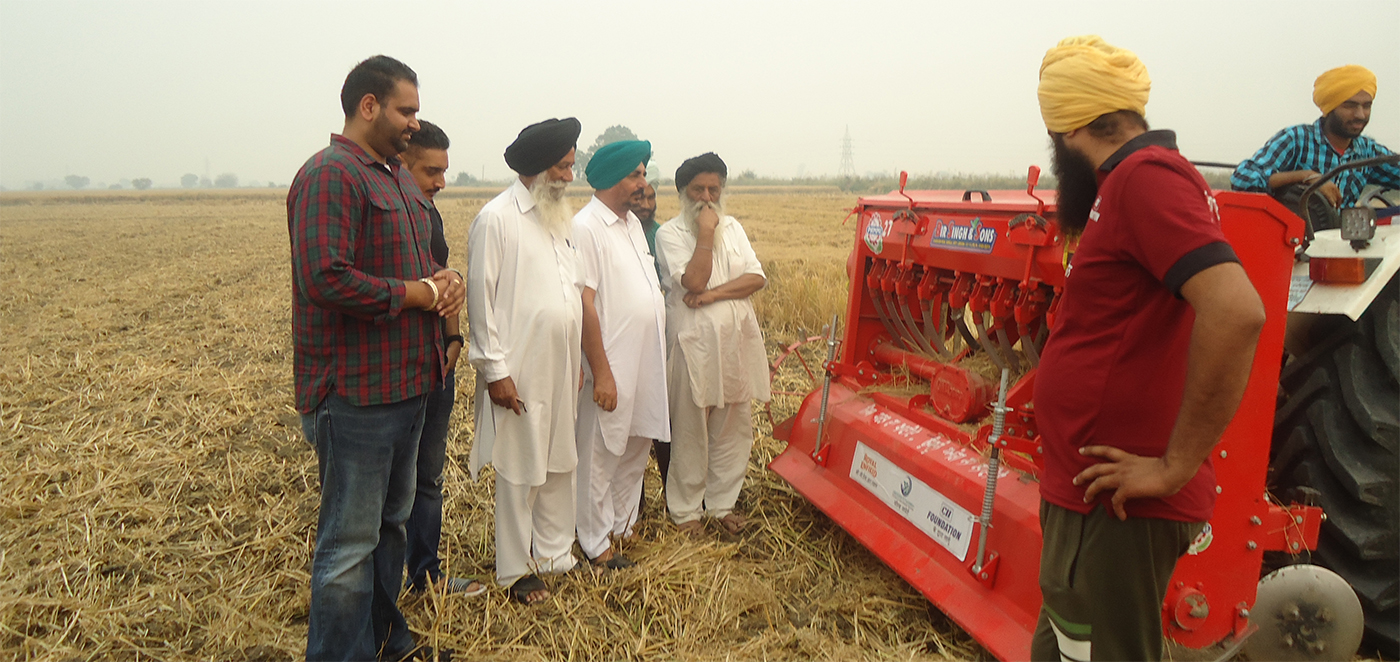
Under this initiative, farmers are supported through in-situ and ex-situ methods to adopt environment friendly alternatives to stubble burning through a gamut of interventions.


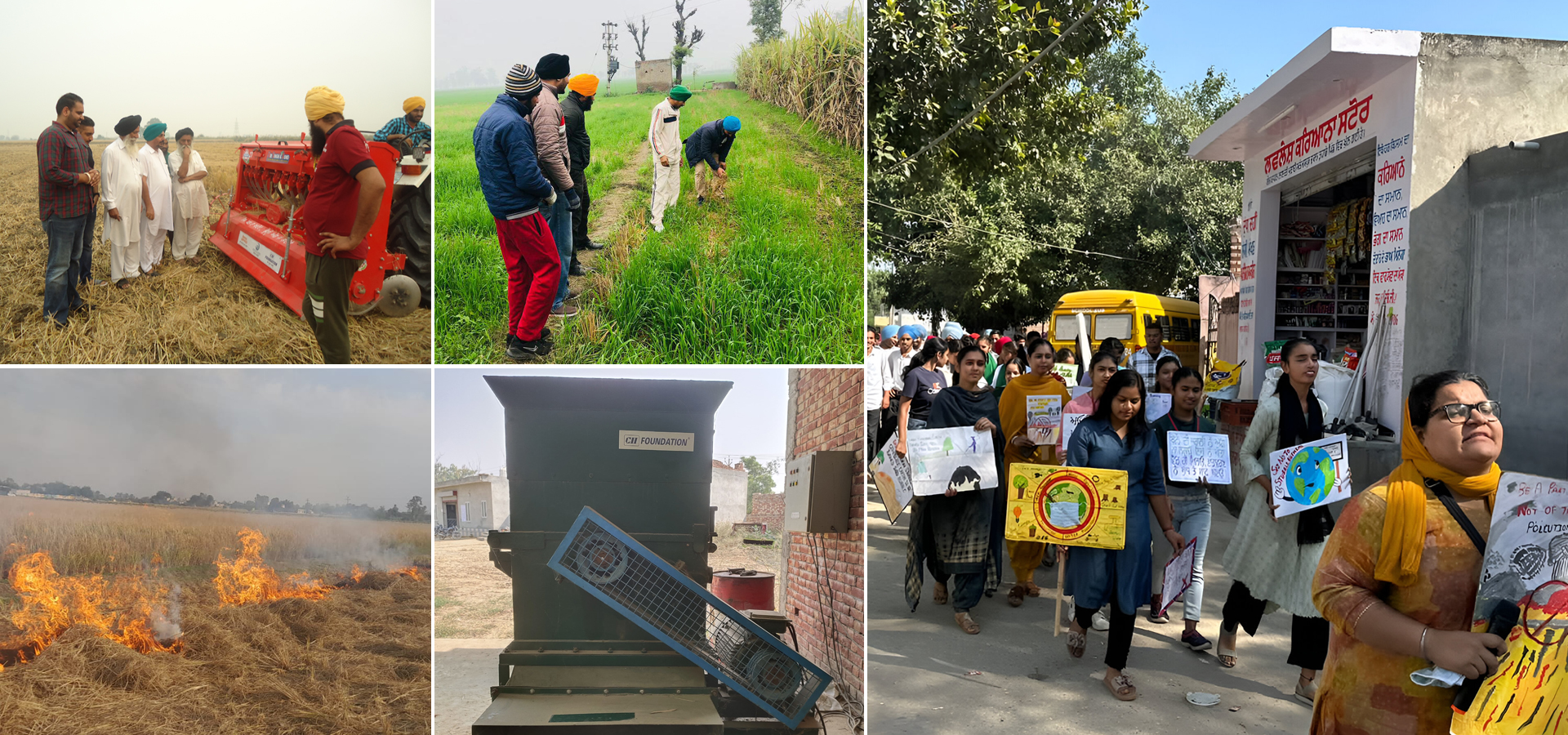
Creating awareness about the ill-effects of stubble burning and viable alternatives available to farmers, through a series of regular awareness drives. Meetings, wall paintings, farm field visits, awareness vans are run during the season to encourage farmers to associate with the project and adopt sustainable agricultural practices.
Promoting In-situ crop residue management through promotion and adoption of Happy Seeders, Super Straw Management Systems (Super SMS), and mulchers. As of 2024, 450 community Tool Banks have been set up in collaboration with 256 Co-operative Societies, with a total of 1,227 machines available across these Tool Banks.
Over 2,000 technical trainings organised with support from manufacturers, Punjab Agricultural University (PAU), Haryana Agricultural University and other expert farmers.
Promoting Ex-situ management solutions including use of balers and establishment of biomass collection & storage systems for energy generation and industrial use. Installed 9 Biogas plants and 3 Bio compost plants. Installation of bio palletisation plants are underway.
In the 2024 season, 87% of farmland across 793 villages in Punjab and Haryana was made free of stubble burning, with 1,47,736 farmers adopting sustainable practices.
| Year | 2018 | 2019 | 2020 | 2021 | 2022 | 2023 | 2024 | 2025 |
|---|---|---|---|---|---|---|---|---|
| No. of Villages | 19 | 107 | 162 | 235 | 300 | 432 | 793 | 1,003 |
| Farmland Covered (Acres) | 14,947 | 103,392 | 157,967 | 223,919 | 315,849 | 497,684 | 884,381 | 1,133,676 |
| No. of Farmers | 2,220 | 12,967 | 21,516 | 39,016 | 48,222 | 88,049 | 145,933 | 208,880 |
| Straw managed from being burnt | 94% | |
| Straw managed from being burnt | 2.04 million | |
| Avoided Air Quality Impacts* | Fine Particulate Matter (PM 2.5) | 8699.2 tonnes |
| Volatile Organic Compounds (VOCs) | 10590.3 tonnes | |
| Ammonia (NH3) | 6202.9 tonnes | |
| Oxides of Nitrogen (NOx) | 2950.2 tonnes | |
| Sulphur Dioxide (SO2) | 438.7 tonnes | |
| Avoided Global Warming Impacts* | Carbon Dioxide (CO2) | 1.84 million tonnes |
| Methane (CH4) | 14523.8 tonnes | |
| Black Carbon (BC) | 968.3 tonnes | |
| Water Saving | 96.58 billion litres | |
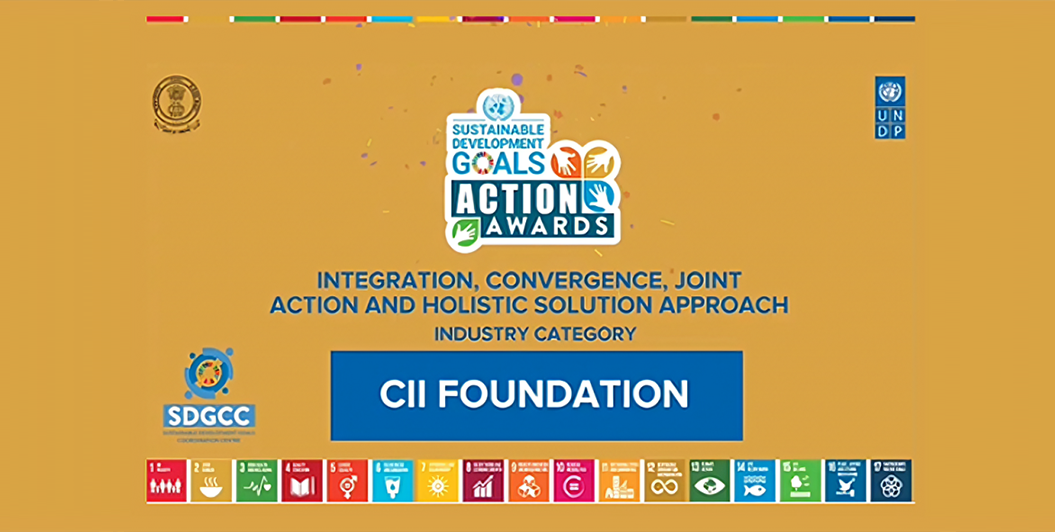
In 2020, the Crop Residue Management initiative received the United Nations Sustainable Development Goals (UNSDG) Action Award by UNDP in partnership with the Government of Punjab under the category ‘Integration, Convergence, Joint Action and Holistic Solution Approach – Industry’. The SDG Action Awards recognise efforts of change makers who are working towards making the world a better place.
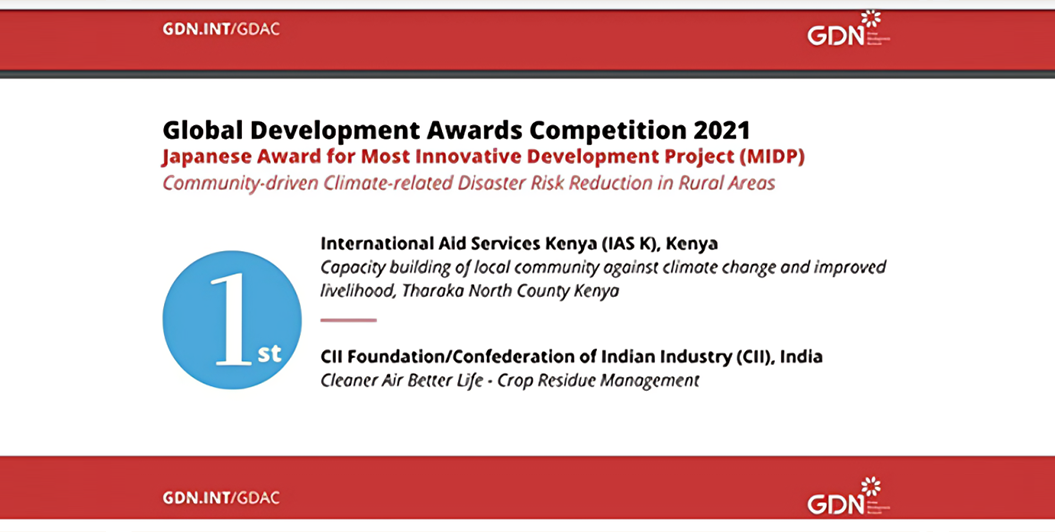
The Crop Residue Management Initiative received the Global Development Award 2021 under the Most Innovative Development Programme Theme 2: Community-driven Climate-related Disaster Risk Reduction in Rural Areas. The award recognised the work for “a promising approach to impact the life of local communities in a holistic way while addressing climate change impacts.” The award has been instituted by the Global Development Network (GDN), a public international organization which supports high quality, policy-oriented, social science research in developing and transition countries.